Introduction
Building a multi vendor marketplace in Laravel is more than just adding products and vendors. If you want to compete with platforms like Amazon or Etsy, your marketplace must be powerful, scalable, and feature-rich.
Before you start development — or purchase a ready-made script — use this complete 2026 checklist to ensure your platform has everything required for long-term success.
If you haven’t read our step-by-step development guide, check it here:
How to Build a Laravel Multi Vendor Marketplace (Step-by-Step Guide 2026)
1. Core Marketplace Features
These are the foundation of every successful multi vendor platform.
Multi Vendor Registration System
- Separate vendor and customer registration
- Email verification
- Admin approval system
- KYC document upload option
Vendor Dashboard Features
A powerful vendor panel is essential.
Must include:
- Sales overview
- Revenue analytics
- Product management
- Order tracking
- Withdrawal requests
Product Management System
- Add, edit, and delete products
- Product variants (size, color, etc.)
- Inventory tracking
- Bulk upload support
- Product approval workflow
Order Management
- Order status tracking
- Invoice generation
- Order notifications
- Return and refund handling
Commission Management
- Fixed commission
- Percentage-based commission
- Category-wise commission
- Vendor-specific commission rules
2. Advanced Marketplace Features (2026 Must-Have)
To compete in 2026, basic features are not enough.
Wallet System
- Vendor wallet
- Customer wallet
- Refund credits
- Automatic commission deduction
Subscription Plans for Vendors
- Monthly and yearly plans
- Commission override by plan
- Featured vendor access
- Recurring revenue model
Payout Management
- Manual payouts
- Automatic payouts
- Bank transfer integration
- Payapl, Stripe and Razorpay support
Coupon and Discount System
- Vendor-level coupons
- Marketplace-wide offers
- Flash sales
- Promo codes
Review and Rating System
- Product reviews
- Vendor ratings
- Verified purchase badge
3. Admin Panel Features
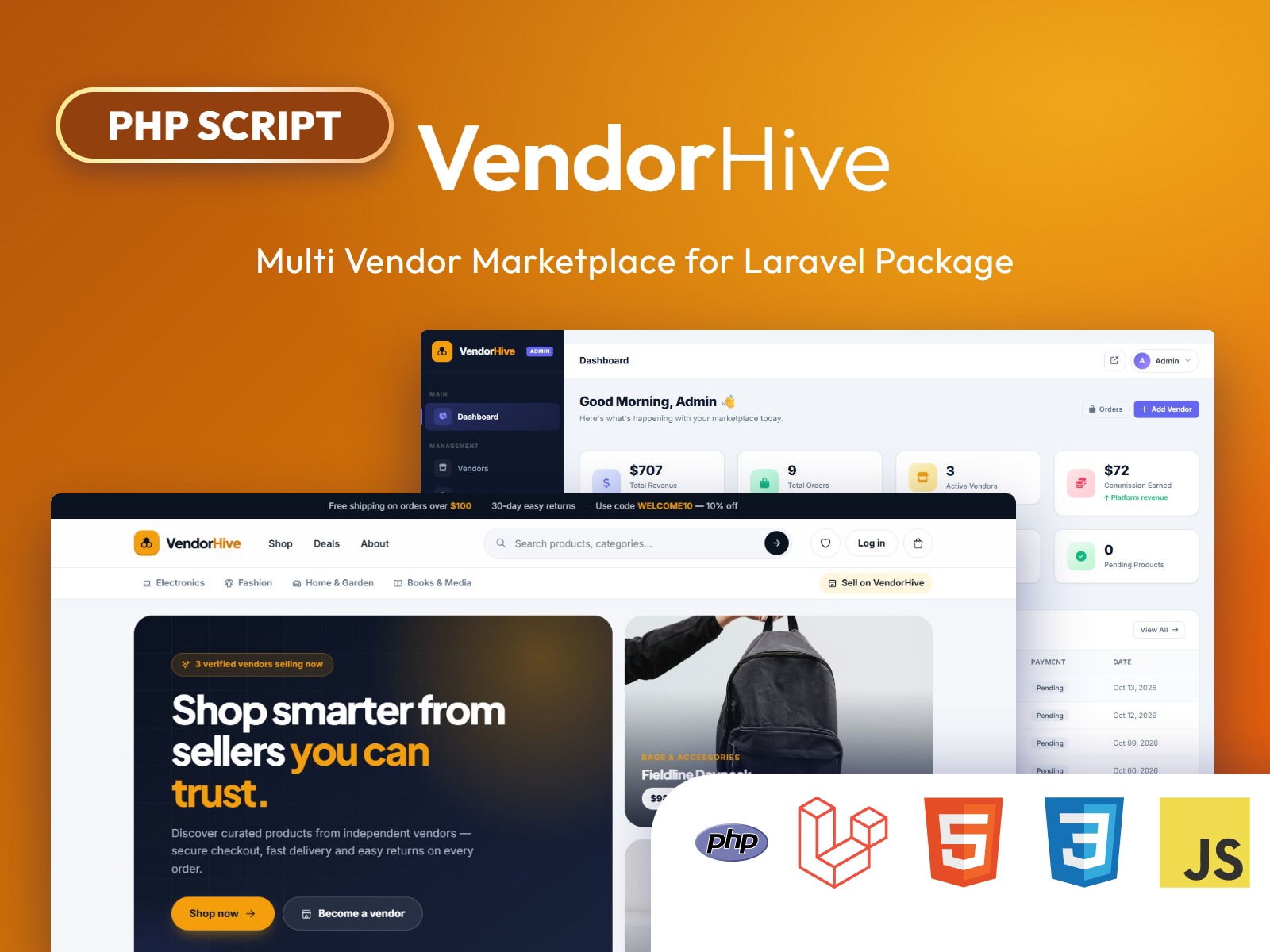
Advanced Dashboard Analytics
- Total revenue tracking
- Vendor earnings reports
- Commission breakdown
- Growth charts
Vendor Management
- Approve or suspend vendors
- View vendor sales history
- Manage vendor payouts
Product Moderation
- Approve new products
- Block restricted items
- Manage product categories
CMS and SEO Management
- Blog management
- Static pages
- FAQ section
- SEO meta settings
4. Security and Performance Features
Role-Based Access Control
- Admin
- Sub Admin
- Vendor
- Customer
API Security
- Token authentication
- Rate limiting
- Encrypted data handling
Performance Optimization
- Laravel caching
- Queue jobs for heavy processes
- Optimized database indexing
- Cloud hosting readiness
5. Payment Gateway Integrations
- Stripe
- Razorpay
- PayPal
- Cash on Delivery
- Wallet payments
Multi-gateway support increases global scalability.
Final Thoughts
Before launching your Laravel multi vendor marketplace, ensure your platform includes all essential and advanced features listed above. A well-structured marketplace with strong monetization and security features will scale smoothly in 2026 and beyond.
Launching faster means earning faster. Choose the right foundation for your marketplace success.